Fun & Engaging
Art Enrichment
& Cultural Art Lessons
How-to-draw videos, culturally relevant art activities, and evidence-based art therapy prompts — all designed to spark creativity and emotional resilience in K–5 students.
“Alix has ADHD. He never sits still and he sits on the floor for 30–45 minutes during ChalkWild art time, watching these how-to-draw videos and drawing on his ChalkWild backpack. It’s an amazing sight to see. Another kid who is really shy — he does not like to show his drawing. After a couple weeks of engaging in ChalkWild’s art program, he volunteers to show his art to staff.”— Captain Kim · Salvation Army Modesto
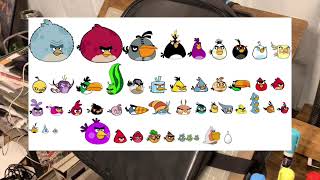
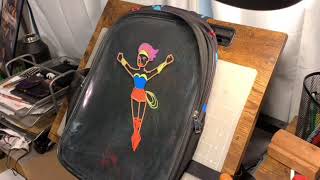
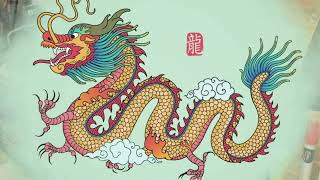
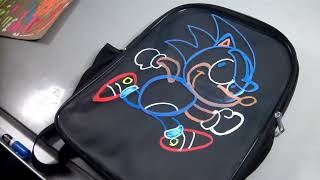
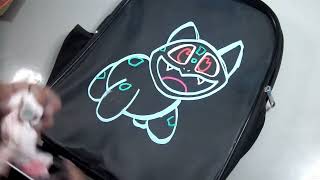
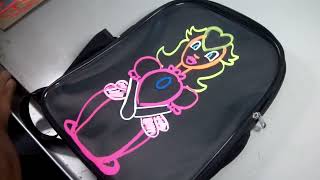
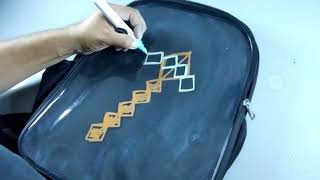
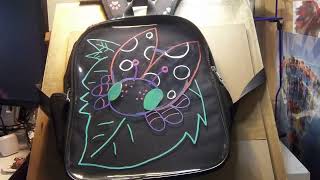
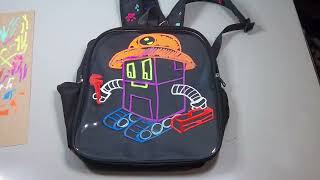
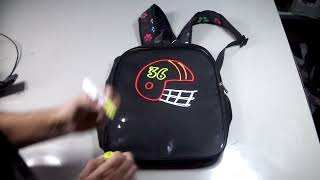
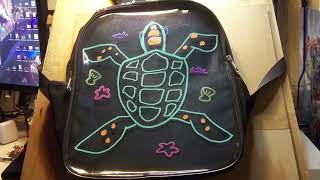
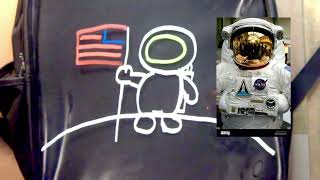
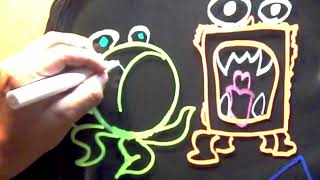
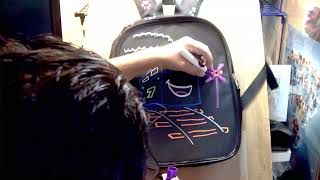
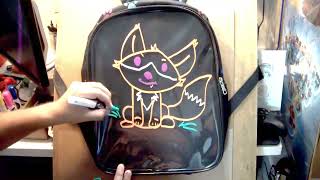
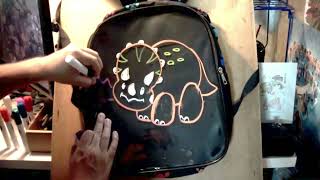
How-to-Draw on Your ChalkWild Backpack
Follow along with these fun drawing tutorials — click any thumbnail to watch. Perfect for classroom art time, afterschool, or home.



Culturally Relevant & Trauma-Informed Art Activities
Printable art activities celebrating diverse cultures and identities — designed for classrooms and afterschool programs.
Black History Art Activities
⬇ Download PDFAsian American History
⬇ Download PDFHispanic Heritage Month Art Activity
⬇ Download PDFNative American Art Activity
⬇ Download PDFColoring My Heart Art Activity
⬇ Download PDFTic Tac Toe Art Game
⬇ Download PDFMandala Art for Mindfulness
⬇ Download PDFVisual Goal Setting Art Activity
⬇ Download PDFChalkWild Drawing Lesson Plans
Three grade bands · California VAPA Standards (2019) · CASEL-Connected · No-prep facilitator instructions
My Feelings Face
📣 Facilitator Steps ▼
- Hand out backpacks and chalk markers — no other prep needed.
- Say: “Today we’re going to draw a face that shows a feeling. Every face you draw is right.”
- Draw a big circle — tell students to do the same.
- Draw two eyes — wide open (surprised) or squinted (happy).
- Draw eyebrows — up for surprised, down/together for mad.
- Add a small nose — a dot or curved line.
- Draw a mouth: smile curves up, frown curves down, straight = calm.
- Add hair, ears, or a hat to make it personal.
- Ask neighbors to guess each other’s emotion.
🚀 Extension: Draw the same face showing TWO emotions, one on each side of the backpack.
Rainbow Fish
📣 Facilitator Steps ▼
- Say: “We’re going to draw a rainbow fish today — just follow each step.”
- Draw a big oval — egg-shaped, almost fills the backpack.
- Add a triangle on the right side for the tail.
- Draw small triangles on top and below for fins.
- Circle for the eye, tiny curved line for the mouth.
- Draw curved lines across the body for scale shapes.
- Color each scale a different color — try a pattern!
- Add small circle bubbles floating up from the mouth.
🚀 Extension: Draw an ocean scene — add seaweed, a crab, or a starfish.
My Community Helper
📣 Facilitator Steps ▼
- Ask: “What community helpers do you know?” Take a few answers.
- Draw a circle for the head and a rectangle below for the body.
- Draw the helper’s special clothing or hat.
- Add arms and legs — stick arms and legs are totally fine!
- Draw a tool the helper uses (hose, stethoscope, book, hammer…).
- Add a background — where does this helper work?
- Write or help students label the helper’s job title at the top.
🚀 Extension: Draw YOURSELF as a community helper — what would you wear and do?
Silly Fruit Friends
📣 Facilitator Steps ▼
- Say: “We’re turning fruit into funny cartoon characters — the weirder the better!”
- Choose a fruit: apple, banana, strawberry, watermelon, or pineapple.
- Draw the basic fruit shape big and bold — HUGE, fill the backpack!
- Add a face: two eyes, a nose, a big goofy grin.
- Give it stick arms and legs.
- Add one accessory: a hat, cape, sunglasses, or shoes.
- Color the fruit — realistic OR a wild color (purple apple? Why not!).
- Whisper your fruit friend’s name to a neighbor.
🚀 Extension: Draw two fruit friends doing something together — lunch? Basketball? A road trip?
My Calm Place
📣 Facilitator Steps ▼
- Optional: play soft instrumental music. Do 3 slow deep breaths together first.
- Say: “Close your eyes for 10 seconds and think of a place where you feel calm and safe.”
- Draw the sky or background first — use colors that feel calm to you.
- Add the ground — grass, sand, clouds, or a cozy floor.
- Draw 2–3 things that make it feel calm (trees, water, your pet, stars…).
- Draw a simple stick figure of yourself in the middle.
- Fill in colors — no wrong color for calm.
- Help students write “My Calm Place” at the top.
🚀 Extension: Teach a friend to “visit” their calm place using 3 deep breaths and closed eyes.
Art Therapy Prompts for Mental Well-Being
Research-backed prompts to promote emotional expression, resilience, and self-awareness — perfect for backpack drawing time.
Self-Portrait
Draw a self-portrait using colors, symbols, or images that represent your emotions and personal characteristics. Helps explore and communicate self-perception.
Gussak & Rosal, 2013Stress Relief Mandala
Create a symmetrical, circular design using repetitive patterns and colors. Reduces anxiety, promotes relaxation, and enhances focus.
Curry & Kasser, 2011Visual Gratitude Journal
Draw or write about things you are grateful for. Expressing gratitude through art increases positive emotions and improves overall well-being.
Van der Vennet & Serice, 2012Mindfulness Doodle
Focus on your breath and draw continuous lines or shapes. Mindfulness-based art activities decrease stress and improve mood.
Monti et al., 2006Emotional Color Wheel
Create a color wheel with each color representing a specific emotion. Enhances emotional awareness and facilitates emotional processing.
Collier, 2011Positive Affirmation Banner
Write or draw positive affirmations or self-compassion statements. Increases self-esteem and resilience through self-compassionate art activities.
Herrington, 2014Coping Toolbox
Draw images of your favorite coping skills or relaxation techniques. Visual representations reinforce coping strategies during times of stress.
Hinz, 2020Collaborative Art Project
Work with a partner to create a combined artwork, fostering social connectedness and mutual support.
Collie et al., 2006Stress Relief Scribbles
Make continuous lines without lifting your chalk, then color in the spaces. Releases tension, expresses emotions, and stimulates creativity.
Betts, 2005Visual Goal-Setting
Draw or write about personal goals or aspirations, reinforcing motivation and clarifying priorities.
Van der Vennet & Serice, 2012Emotional Landscape
Create a landscape using colors and imagery that represent your emotions, promoting self-expression and emotional processing.
Collier, 2011Mind-Body Connection
Visualize and draw physical sensations or body awareness experiences. Enhances self-awareness and promotes relaxation.
Rogers, 1993Artistic Problem-Solving
Create a visual representation of a problem and potential solutions, supporting critical thinking and problem-solving skills.
Gussak & Rosal, 2013Role Model Portrait
Draw a portrait of a role model or someone who has positively influenced your life, fostering inspiration and aspiration.
Van der Vennet & Serice, 2012Mood Color Chart
Create a chart with various colors and label each with an associated mood or feeling. Promotes emotional awareness and understanding.
Collier, 2011Fun & Engaging
Art Enrichment
& Cultural Art Lessons
How-to-draw videos, culturally relevant art activities, and evidence-based art therapy prompts — all designed to spark creativity and emotional resilience in K–5 students.
“Alix has ADHD. He never sits still and he sits on the floor for 30–45 minutes during ChalkWild art time, watching these how-to-draw videos and drawing on his ChalkWild backpack. It’s an amazing sight to see. Another kid who is really shy — he does not like to show his drawing. After a couple weeks of engaging in ChalkWild’s art program, he volunteers to show his art to staff.”— Captain Kim · Salvation Army Modesto
How-to-Draw on Your ChalkWild Backpack
Follow along with these fun drawing tutorials — click any thumbnail to watch. Perfect for classroom art time, afterschool, or home.
Culturally Relevant & Trauma-Informed Art Activities
Printable art activities celebrating diverse cultures and identities — designed for classrooms and afterschool programs.
Black History Art Activities
⬇ Download PDFAsian American History
⬇ Download PDFHispanic Heritage Month Art Activity
⬇ Download PDFNative American Art Activity
⬇ Download PDFColoring My Heart Art Activity
⬇ Download PDFTic Tac Toe Art Game
⬇ Download PDFMandala Art for Mindfulness
⬇ Download PDFVisual Goal Setting Art Activity
⬇ Download PDFChalkWild Drawing Lesson Plans
Three grade bands · California VAPA Standards (2019) · CASEL-Connected · No-prep facilitator instructions
My Feelings Face
📣 Facilitator Steps ▼
- Hand out backpacks and chalk markers — no other prep needed.
- Say: “Today we’re going to draw a face that shows a feeling. Every face you draw is right.”
- Draw a big circle — tell students to do the same.
- Draw two eyes — wide open (surprised) or squinted (happy).
- Draw eyebrows — up for surprised, down/together for mad.
- Add a small nose — a dot or curved line.
- Draw a mouth: smile curves up, frown curves down, straight = calm.
- Add hair, ears, or a hat to make it personal.
- Ask neighbors to guess each other’s emotion.
🚀 Extension: Draw the same face showing TWO emotions, one on each side of the backpack.
Rainbow Fish
📣 Facilitator Steps ▼
- Say: “We’re going to draw a rainbow fish today — just follow each step.”
- Draw a big oval — egg-shaped, almost fills the backpack.
- Add a triangle on the right side for the tail.
- Draw small triangles on top and below for fins.
- Circle for the eye, tiny curved line for the mouth.
- Draw curved lines across the body for scale shapes.
- Color each scale a different color — try a pattern!
- Add small circle bubbles floating up from the mouth.
🚀 Extension: Draw an ocean scene — add seaweed, a crab, or a starfish.
My Community Helper
📣 Facilitator Steps ▼
- Ask: “What community helpers do you know?” Take a few answers.
- Draw a circle for the head and a rectangle below for the body.
- Draw the helper’s special clothing or hat.
- Add arms and legs — stick arms and legs are totally fine!
- Draw a tool the helper uses (hose, stethoscope, book, hammer…).
- Add a background — where does this helper work?
- Write or help students label the helper’s job title at the top.
🚀 Extension: Draw YOURSELF as a community helper — what would you wear and do?
Silly Fruit Friends
📣 Facilitator Steps ▼
- Say: “We’re turning fruit into funny cartoon characters — the weirder the better!”
- Choose a fruit: apple, banana, strawberry, watermelon, or pineapple.
- Draw the basic fruit shape big and bold — HUGE, fill the backpack!
- Add a face: two eyes, a nose, a big goofy grin.
- Give it stick arms and legs.
- Add one accessory: a hat, cape, sunglasses, or shoes.
- Color the fruit — realistic OR a wild color (purple apple? Why not!).
- Whisper your fruit friend’s name to a neighbor.
🚀 Extension: Draw two fruit friends doing something together — lunch? Basketball? A road trip?
My Calm Place
📣 Facilitator Steps ▼
- Optional: play soft instrumental music. Do 3 slow deep breaths together first.
- Say: “Close your eyes for 10 seconds and think of a place where you feel calm and safe.”
- Draw the sky or background first — use colors that feel calm to you.
- Add the ground — grass, sand, clouds, or a cozy floor.
- Draw 2–3 things that make it feel calm (trees, water, your pet, stars…).
- Draw a simple stick figure of yourself in the middle.
- Fill in colors — no wrong color for calm.
- Help students write “My Calm Place” at the top.
🚀 Extension: Teach a friend to “visit” their calm place using 3 deep breaths and closed eyes.
15 New Drawing Lesson Plans
PreK–Grade 3 · California VAPA Standards (2019) · CASEL-Connected · No-Prep Facilitator Instructions
PreK–Grade 1
Weather Feelings
📣 Facilitator Steps ▼
- Say: “Weather is like feelings — sometimes sunny, sometimes stormy. Let’s draw the weather that matches how we feel today.”
- Ask students to close eyes and think: “Am I sunny? Cloudy? Rainy? Windy?”
- Draw the sky first — fill the whole top of the backpack with sky colors.
- Add weather: sun rays, raindrops, clouds, lightning, snowflakes, or a rainbow.
- Draw the ground below — puddles, flowers, dry grass, or snow.
- Add a small stick figure of YOU standing in the weather.
- Write or dictate the feeling word at the top: “happy,” “worried,” “excited,” “calm.”
My Dream House
📣 Facilitator Steps ▼
- Say: “If you could live ANYWHERE in ANY kind of house — what would it look like?”
- Draw a big rectangle for the house body — fill most of the backpack.
- Add a triangle on top for the roof.
- Draw a door — any shape! Round, square, huge, tiny.
- Add windows — circles, stars, hearts — they don’t have to be regular squares.
- Draw ONE wild feature: a slide instead of stairs, a pool on the roof, a candy chimney.
- Add something OUTSIDE — a garden, a pet, a tree, a rocketship garage.
- Color the house in your favorite colors.
Caterpillar to Butterfly
📣 Facilitator Steps ▼
- Say: “A caterpillar doesn’t stay a caterpillar forever — it CHANGES. Let’s draw the whole story.”
- Divide the backpack into THREE sections with light lines — left, center, right.
- LEFT: Draw a caterpillar — a row of connected circles with legs and antennae.
- CENTER: Draw the cocoon — an oval hanging from a branch.
- RIGHT: Draw a butterfly — big wings, a thin body, antennae.
- Add an arrow (→) between each stage.
- Color the caterpillar green, the cocoon brown, the butterfly in BRIGHT colors.
- Add a leaf for the caterpillar and flowers for the butterfly.
My Family Portrait
📣 Facilitator Steps ▼
- Say: “Families come in all shapes and sizes. Draw YOUR family — everyone who matters to you.”
- Draw yourself in the CENTER first — head, body, arms, legs.
- Add each family member beside you — make them taller or shorter to show size.
- Give each person their own hair style, clothing, or favorite color.
- Don’t forget pets! Dogs, cats, fish, hermit crabs — they count.
- Add a background — are you at home? At a park? At the dinner table?
- Write each person’s name (or first letter) above them.
Garden of Shapes
📣 Facilitator Steps ▼
- Say: “Everything in a garden is made of shapes — let’s prove it!”
- Draw a green rectangle at the bottom for the ground.
- Draw flowers: circles for centers, ovals or triangles for petals, rectangles for stems.
- Draw a sun — one big circle with triangle rays around it.
- Add a butterfly — two big ovals for wings, a small rectangle body.
- Draw clouds — groups of overlapping circles.
- Challenge: can you hide a SQUARE, a DIAMOND, and an OVAL somewhere in the garden?
- Color everything in — use lots of bright colors.
If I Had a Superpower
📣 Facilitator Steps ▼
- Ask: “If you could have ONE superpower — flying, invisibility, super speed, talking to animals — what would it be?”
- Draw YOURSELF big and bold in the center — this is YOUR superpower.
- Show the power: add wings, speed lines, glow marks, sparkles, or energy waves.
- Draw what you’re DOING with the power — helping someone? Exploring? Rescuing a kitten?
- Add a background showing WHERE you are — a city, the sky, underwater, outer space.
- Add one detail that makes it YOU — your favorite color, your hairstyle, your shoes.
- Write your superpower name at the top.
My Favorite Meal
📣 Facilitator Steps ▼
- Say: “Think about your absolute FAVORITE meal — the one that makes your mouth water. We’re drawing it!”
- Draw a big circle for the plate — almost fills the backpack.
- Draw your main food in the center — pizza, tacos, pho, mac and cheese, tamales, rice, anything!
- Add at least TWO side items — a drink, fruit, bread, salad, beans.
- Color everything to look delicious — make it bright and appetizing.
- Add one detail: a fork, chopsticks, a napkin, or your hand reaching for it.
- Tell your neighbor what you drew and WHERE your family eats this meal.
Nighttime Sky
📣 Facilitator Steps ▼
- Optional: dim lights slightly to set the mood. Play soft music.
- Say: “We’re drawing the nighttime — when everything gets quiet and the stars come out.”
- Color the whole background DARK — dark blue, dark purple, or black.
- Draw a moon — full circle, half circle, or crescent. Color it bright yellow or white.
- Add stars — dots, plus signs, or tiny star shapes scattered everywhere.
- Draw ONE thing on the ground — a house with a glowing window, a tree, a tent, or a sleeping animal.
- Add something that GLOWS — fireflies, a streetlamp, a campfire.
- Step back and look — notice how the bright parts “pop” against the dark.
Grades 2–3
Map of My Neighborhood
📣 Facilitator Steps ▼
- Say: “Imagine you’re a bird flying ABOVE your neighborhood looking straight down. That’s how we’re drawing today.”
- Draw two or three roads — straight or curved — across the backpack.
- Add your HOME as a small square or rectangle. Label it.
- Add at least FOUR more places — your school, a park, a store, a friend’s house, a church, a library.
- Use simple shapes for each building — viewed from above, not from the side.
- Draw a small KEY in the corner with symbols: ★ = school, ● = my house, etc.
- Add trees, a playground, or a parking lot to fill in spaces.
- Draw a dotted line showing your route from home to school.
Two-Face Mask: Two Feelings
📣 Facilitator Steps ▼
- Say: “Have you ever felt happy AND nervous at the same time? Like the first day of school? Today we’ll draw BOTH feelings on one face.”
- Draw a large oval face shape — fills most of the backpack.
- Draw a vertical line straight down the CENTER of the face.
- LEFT side: draw features showing ONE emotion — eyebrow, eye, half-mouth.
- RIGHT side: draw features showing a DIFFERENT emotion — mirror the features but change them.
- Color each side with colors that match the mood — warm vs. cool, bright vs. muted.
- Add decorative details — patterns, symbols, or textures on each side.
- Write one emotion word under each half.
Camouflage Creature
📣 Facilitator Steps ▼
- Say: “Some animals hide by looking EXACTLY like their surroundings. Your job: make an animal that’s almost impossible to find.”
- Choose a habitat: forest, ocean, desert, snow, or a garden.
- Draw and fully COLOR the background FIRST — this is key!
- Now design an animal that MATCHES the background — same colors, same patterns.
- Draw the animal right ON TOP of the background — it should nearly disappear.
- Add tiny details so someone CAN find it — outline, one different-colored eye, a shadow.
- Challenge a partner: “Can you find my creature?”
Draw the Music
📣 Facilitator Steps ▼
- Say: “Today we’re NOT drawing things. We’re drawing SOUNDS. No animals, no people — just lines, shapes, and colors.”
- Play a 2-minute clip of music with a clear mood (classical, jazz, drums, soft piano).
- While listening, students draw: fast music = jagged, sharp lines. Slow music = smooth, wavy curves.
- Loud = BIG bold marks. Quiet = small, gentle marks.
- Use colors that FEEL like the music — warm? Cool? Dark? Bright?
- Play a SECOND clip with a different mood. Draw on the other half of the backpack.
- Compare the two halves — how are they different?
Pattern Block Quilt
📣 Facilitator Steps ▼
- Show a photo of a patchwork quilt or pattern block design.
- Say: “Quilts tell stories through patterns. Every family, every culture has quilts. Let’s design ours.”
- Draw a grid on the backpack — at least 3×3 (9 squares). 4×4 for a challenge.
- Design ONE square block — pick 2–3 shapes (triangle, diamond, circle, square) and 3 colors.
- Now REPEAT that exact block in every square — same shapes, same colors, same positions.
- Try alternating: every other block gets rotated or uses a different color combo.
- Fill in ALL colors carefully — neatness is part of the challenge.
- Step back and look at the whole thing together — see the pattern emerge!
My Day in Four Panels
📣 Facilitator Steps ▼
- Say: “We’re making a 4-panel comic strip about YOUR real day — morning, school, afternoon, night.”
- Divide the backpack into FOUR equal boxes — two on top, two on bottom.
- Panel 1 (top-left): MORNING — waking up, eating breakfast, getting ready.
- Panel 2 (top-right): SCHOOL — your favorite part of the school day.
- Panel 3 (bottom-left): AFTERNOON — afterschool activity, playing, homework, snacks.
- Panel 4 (bottom-right): NIGHT — dinner, bath, reading, bedtime.
- Draw yourself in EACH panel — show how your expression changes throughout the day.
- Add one speech bubble or thought bubble in any panel.
If I Could Go Anywhere
📣 Facilitator Steps ▼
- Say: “If you could go ANYWHERE — real or made up — where would you go? The moon? Japan? A chocolate island? Draw it!”
- Fill the background first — what does the sky and land look like in this place?
- Add at least THREE details that show WHERE this is — a famous building, unique plants, animals, food, or signs.
- Draw yourself in the scene — what are you wearing? What are you doing?
- Add one person from that place welcoming you or showing you around.
- Add a sign or label with the name of the place.
- Color the whole scene — make it feel like you’re THERE.
Art Therapy Prompts for Mental Well-Being
Research-backed prompts to promote emotional expression, resilience, and self-awareness — perfect for backpack drawing time.
Self-Portrait
Draw a self-portrait using colors, symbols, or images that represent your emotions and personal characteristics. Helps explore and communicate self-perception.
Gussak & Rosal, 2013Stress Relief Mandala
Create a symmetrical, circular design using repetitive patterns and colors. Reduces anxiety, promotes relaxation, and enhances focus.
Curry & Kasser, 2011Visual Gratitude Journal
Draw or write about things you are grateful for. Expressing gratitude through art increases positive emotions and improves overall well-being.
Van der Vennet & Serice, 2012Mindfulness Doodle
Focus on your breath and draw continuous lines or shapes. Mindfulness-based art activities decrease stress and improve mood.
Monti et al., 2006Emotional Color Wheel
Create a color wheel with each color representing a specific emotion. Enhances emotional awareness and facilitates emotional processing.
Collier, 2011Positive Affirmation Banner
Write or draw positive affirmations or self-compassion statements. Increases self-esteem and resilience through self-compassionate art activities.
Herrington, 2014Coping Toolbox
Draw images of your favorite coping skills or relaxation techniques. Visual representations reinforce coping strategies during times of stress.
Hinz, 2020Collaborative Art Project
Work with a partner to create a combined artwork, fostering social connectedness and mutual support.
Collie et al., 2006Stress Relief Scribbles
Make continuous lines without lifting your chalk, then color in the spaces. Releases tension, expresses emotions, and stimulates creativity.
Betts, 2005Visual Goal-Setting
Draw or write about personal goals or aspirations, reinforcing motivation and clarifying priorities.
Van der Vennet & Serice, 2012Emotional Landscape
Create a landscape using colors and imagery that represent your emotions, promoting self-expression and emotional processing.
Collier, 2011Mind-Body Connection
Visualize and draw physical sensations or body awareness experiences. Enhances self-awareness and promotes relaxation.
Rogers, 1993Artistic Problem-Solving
Create a visual representation of a problem and potential solutions, supporting critical thinking and problem-solving skills.
Gussak & Rosal, 2013Role Model Portrait
Draw a portrait of a role model or someone who has positively influenced your life, fostering inspiration and aspiration.
Van der Vennet & Serice, 2012Mood Color Chart
Create a chart with various colors and label each with an associated mood or feeling. Promotes emotional awareness and understanding.
Collier, 2011